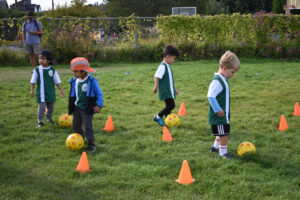

Fear is a natural and necessary part of early childhood development. For preschoolers, the world is full of new experiences that can bring moments of uncertainty. While fear can feel uncomfortable, it’s also one of the most important emotions for growth. Learning how to face and manage their emotions can help children build confidence, resilience, and emotional understanding that will help them throughout their lives.
Feeling Fear is an Opportunity for Learning and Growth
When a child feels fear, their brain is learning to process risk, safety, and trust. Rather than avoiding fearful moments, we can help children see them as opportunities to learn about their emotions. By acknowledging these emotions, we are teaching our preschoolers that those emotions are nothing to be afraid of. The ability to regulate these emotions and embrace the fear will provide opportunities for children to learn and grow.
How We Help
Create a Safe, Predictable Environment
Children are more likely to take healthy risks when they know what to expect. Predictable routines and consistency will help preschoolers feel safe in their environment to explore their fears. As caregivers, we want to provide an environment where preschoolers feel safe to feel and express their fears.
Encourage Effort
Overcoming fears is not going to happen in one big chunk. It takes small moments of repeated courage. Whatever the fear might be, breaking the challenges into small steps will make success feel achievable. By encouraging the effort it might take to be brave, children focus on the process, rather than the outcome.
Nurture Resilience
Learning to manage the ability to be uncomfortable is one of the most powerful emotional skills preschoolers can develop. When children experience fear in safe, supportive environments and are guided through it with empathy and encouragement, they begin to believe in their own ability to cope with whatever comes next. Overcoming fear isn’t just about being brave, it’s about learning that courage grows with every small step forward.
References:
- National Association for the Education of Young Children (NAEYC). (2021). Helping Children Overcome Fears: A Developmental Approach.
- American Academy of Pediatrics. (2020). Building Resilience in Young Children.
- Denham, S. A., & Brown, C. (2010). “Plays Nice With Others”: Social–Emotional Learning and Academic Success. Early Education and Development, 21(5), 652–680.
Ginsburg, K. R. (2007). The Importance of Play in Promoting Healthy Child Development and Maintaining Strong Parent-Child Bonds. Pediatrics, 119(1), 182–191.