
September's Big Idea: Learning and Improving
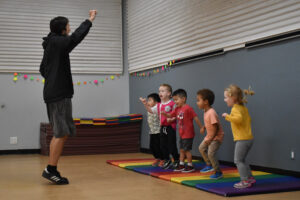
Our motto at HappyFeet is that we are educators, not coaches. Our top priority is to provide a safe environment for our students to learn, fail, and grow. Each month, our classes focus on skills that will benefit our students as they continue to develop.
Why It Matters
Researchers see significant growth in a child’s executive function during their preschool years. There are 3 main skills that begin developing in early infancy: working memory, cognitive flexibility, and impulse control. These skills are responsible for learning to follow multiple directions, adapt to changing rules. and retain information. These tools are vital as they continue to develop and learn.
Children who build learning-to-learn skills in preschool show:
-
Better academic performance in reading and math later.
-
Stronger emotional regulation, which supports friendships and classroom success.
-
Increased confidence in trying new challenges, leading to long-term motivation.
How We Encourage 'Learning to Learn'
Teaching preschoolers how to learn means creating environments where these vital skills can grow naturally through play, relationships, and reflection.
1. Create Safe Opportunities to Try and Fail
Making a mistake can be hard and scary. By normalizing mistakes and celebrating the effort it takes to try again, we create safe spaces where children can learn through trial and error. During classes, we might praise when a child tries a hard move after they fail. This models resilience and teaches that errors are part of the process.
2. Emphasize Effort Over Outcomes
Our coaches will focus on praising and encouraging effort rather than outcome. When a child says, “I can’t do it” we want to show and encourage them that trying is what matters most. This approach helps children develop confidence and persistence, knowing that the process of learning is just as valuable as the result.
3. Encourage Curiosity and Questions
Throughout our adventures and games, we provide opportunities for children to flex their curiosity muscles. We will ask open-ended questions about how to accomplish tasks that will encourage their ability to problem solve.
4. Teach Reflection in Simple Steps
Even preschoolers can reflect. After an activity or new move, we might reflect and ask if the move was easy or hard, how we accomplished our goals, and how we felt during the process. This builds healthy habits of reflecting during the learning process.
5. Model Lifelong Learning
Children learn by observing the adults around them. When our coaches show excitement about learning a new skill, children see that growth never stops. This models the joy of being a lifelong learner and encourages them to stay curious and open to new challenges.
References:
Center on the Developing Child at Harvard University. (2011). Building the Brain’s “Air Traffic Control” System: How Early Experiences Shape the Development of Executive Function. Retrieved from https://developingchild.harvard.edu
Dweck, C. S. (2006). Mindset: The New Psychology of Success. New York: Random House.
National Association for the Education of Young Children (NAEYC). (2019). The Power of Playful Learning in Early Childhood Education. Retrieved from https://www.naeyc.org
- Piaget, J. (1970). Science of Education and the Psychology of the Child. New York: Orion Press.