
Why Teamwork Matters In The Early Years
Teamwork is more than just playing together, it encompassing being able to communicate effectively, work towards a common goal, and support each other through the process. These skills come from practice and guidance. Team sports, like soccer, are a great start to learning these skills, but teamwork can be found in all aspects of our lives.
Benefits of Working Together
Communication & Listening Skills: Working as a team is a great way for children to learn to share ideas, listen to each other, and problem solve together.
Confidence & Self-Esteem: Cooperating in a group setting creates a sense of value and belonging. Being a part of a team can elevate confidence and self-worth in young children.
Social-Emotional Development: Through group play, preschoolers are developing empathy, conflict resolution, and cooperation. These skills will benefit their social and emotional well-being for the rest of their lives.
Cognitive & Problem-Solving Skills: Research shows that collaborative activities create opportunities to develop problem-solving skills and rule-based thinking in young children. (PubMed)
Developmental Stages of Teamwork
Solitary Play For children ages 0-2, play will happen independently. They may not interact or notice their peers at this stage.
Parallel Play Young children (ages 2-3.5) will engage in play around each other, or parallel play. This stage provides a chance to get comfortable working around peers, and the ability to observe and imitate.
Associative Play Between the ages of 3-4 children will begin to interact while playing. They might share resources and share interest in what their peers are doing. This stage introduces communication among each other.
Cooperative Play Around ages 4-6 children may begin to work together towards a shared goal. They might build something together or work on solving a problem. At this stage, children will navigate roles, manage conflicts, and practice taking turns.
Structured Teamwork From ages 5-7, children participate in small group tasks with guidance from their adults. They begin to have an understanding of roles, rules, and successes.
How To Develop Teamwork
1. Shared Goals
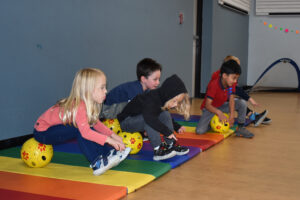
When children are given opportunities to work together towards a common goal, they learn cooperation and teamwork. By providing tasks with shared goals, you can nurture these skills in preschoolers. We might ask our students to work together on a soccer move to accomplish a task or play a game where students work together in order to beat the coach.
2. Rotate Roles
We want to ensure that every child gets opportunities to make leadership decisions. In our classes, we will make sure everyone gets a chance to decide how to reach our common goal. Our coaches try to provide opportunities for every student to express their ideas on how to accomplish a goal.
3. Celebrate Achievements
It is important to encourage teamwork by celebrating when working together has helped us reach a goal. It can be helpful to reflect during or after class about how much easier it is when we work together. Our coaches will point out when our successes are the result of teamwork and congratulate everyone for working together.
Teamwork, just like any skill, takes practice. Being a good teammate means showing respect towards our peers, listening to understand, and collaborating on ideas to create the best outcome.
Resources:
- Cooperative play overview: brightwheel
- Washington State Early Learning and Development Guidelines: DCYF Washington
Early Learning in Washington State: OSPI